3 hours ago
“Clothes for the Girls, Gays, and Thems”: How BoiPKG Is Redefining Queer Dress Codes in 2025
READ TIME: 25 MIN.
In the cavernous Great Hall of the Brooklyn Museum, a model in a crisp, cropped navy blazer struts under cathedral ceilings, the back panel blaring in varsity letters: “STUD ON DUTY.” Paired with pleated shorts, tube socks, and high‑gloss loafers, the look is half Catholic school nostalgia, half queer block party—instantly recognizable to anyone who has ever clocked their people across a crowded Pride.
The brand behind the look is BoiPKG, a Portland streetwear label that has, in less than five years, turned inside jokes, community slang, and gender‑affirming fits into a fully fledged design language. Featured on the runway at dapperQ’s 10th Annual Queer New York Fashion Week show at the Brooklyn Museum in 2025, alongside fellow independent labels like ALEGRÍA and DYKEMINT, BoiPKG represents a new wave of queer fashion that is less about spectacle and more about sustainable, lived‑in liberation.
BoiPKG launched in Portland, Oregon, as a small, masc‑of‑center apparel brand focused on gender‑affirming basics for queer women, nonbinary people, and transmasculine people who were not seeing themselves in mainstream menswear or lesbian merch. Early drops—graphic tees, snapbacks, and shorts—were sold largely through local pop‑ups, community events, and Instagram , centering queer nightlife and mutual‑aid gatherings rather than traditional wholesale channels.
According to coverage of DapperQ’s 10th anniversary show, BoiPKG’s runway debut at the Brooklyn Museum in 2025 marked a major milestone: it was one of just seven independent queer brands invited to present full collections at one of the largest LGBTQIA+ fashion shows in the world. dapperQ’s executive producer Anita Dolce Vita has described the anniversary event as both “defiance, celebration, and survival,” underscoring how essential it is for queer designers to control their own narratives amid increasing pressures on queer visibility.
The brand’s presence at this show, staged inside a major art museum, signaled that BoiPKG had moved beyond regional cult status. It now stands as part of a small but growing cohort of queer labels using fashion not just to dress community, but to archive and weaponize its language and rituals.
Rather than chasing red‑carpet virality or haute‑couture theatrics, BoiPKG’s aesthetic skews toward what queer people actually wear to Pride marches, Dyke Day picnics, ballroom after‑parties, and Sunday grocery runs. In coverage of the 2025 dapperQ show, EveryQueer described the event’s brands—including BoiPKG—as translating “identity and community into fabric, structure, and movement,” bridging bold streetwear and accessible silhouettes that can move from protest to dance floor.
Typical BoiPKG pieces include:
- Tailored shorts and trousers cut to fit bodies that are often sized out or misgendered by mainstream menswear, with particular attention to the hips and thighs of queer women and nonbinary people.
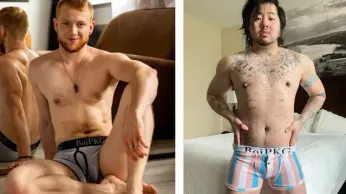
- Boxy tees and crop tops emblazoned with phrases drawn directly from queer masc and stud culture—terms like “Boi Energy,” “Top Shelf,” or regional slang that signals in‑group belonging.
- Lightweight outerwear and suiting separates designed to be layered, allowing wearers to modulate between read‑as‑professional and read‑as‑queer depending on safety and context.
By refusing gendered sizing and offering broad, size‑inclusive runs, BoiPKG responds to a gap that many LGBTQ+ people have long identified between aspirational queer editorials and the realities of finding clothes that fit. This approach is consistent with a wider trend in queer fashion, documented by outlets like EveryQueer and The Advocate, in which community‑rooted designers prioritize accessibility and wearability over runway fantasy.
BoiPKG is part of a lineage of queer brands that treat T‑shirts and jackets as moving billboards for coded language—what some scholars have framed as an informal archive of queer slang and ritual. The brand’s use of words like “boi,” “stud,” and masc‑leaning phrases echoes how earlier generations used handkerchief codes, pins, or patches to signal identity and desire in public. Coverage of dapperQ’s 10th anniversary show emphasized how participating designers incorporated “identity and community” as central design elements rather than afterthoughts, highlighting BoiPKG’s text‑heavy garments as an example of this practice on the runway.
This strategy aligns with broader trends in queer fashion documented by queer culture platforms such as dapperQ and EveryQueer, where designers deploy slogans not as generic empowerment statements but as highly specific references to subcultures, kink scenes, or regional queer histories. In this context, BoiPKG’s designs function as wearable shorthand for community belonging, especially for people whose genders and sexualities are often flattened or misunderstood by mainstream media.
At Pride events and protests, this matters. Organizers and attendees frequently use clothing—matching shirts, slogans, and colors—to signal alignment with particular causes and to create a visual sense of safety and solidarity. Outlets covering Pride and queer fashion, including The Advocate and Autostraddle, have repeatedly noted how sartorial choices become part of the “visual vocabulary” of queer resistance at marches and rallies. BoiPKG’s slogans and silhouettes, grounded in masc‑of‑center and nonbinary culture, extend that vocabulary with new terms and forms tuned to the communities it serves.
BoiPKG’s rise coincides with intensified political attacks on transgender people, drag performers, and LGBTQ+ cultural institutions in the United States, where exhibitions and performances have been postponed or “soft censored” under pressure from conservative groups. Coverage of dapperQ’s 10th anniversary event highlighted how the show functioned as both fashion presentation and political statement, asserting that “queer art—and queer fashion—cannot and will not be erased.”
Within this climate, BoiPKG’s decision to foreground Black, brown, curvy, and trans‑aligned bodies on the runway takes on additional significance. EveryQueer reported that the designers showcased at the 2025 dapperQ show, including BoiPKG, used their platforms to expand representation beyond thin, white, androgynous models, featuring a wide range of body types and gender expressions. This approach counters a longstanding critique that even “gender‑neutral” fashion often defaults to slender, more traditionally masculine silhouettes that do not serve many members of the LGBTQ+ community.
Anita Dolce Vita has articulated this critique directly, stating in interviews about dapperQ’s mission that the goal of queer style is not to make everything “gender neutral” in a way that flattens difference, but to free people from the idea that certain garments belong to specific genders. BoiPKG’s work can be understood as a concrete embodiment of this philosophy: its garments are visibly queer, intentionally gendered in playful and subversive ways, and designed to affirm identities that mainstream brands frequently misread.
Part of what distinguishes BoiPKG from larger labels experimenting with “gender‑fluid” collections is its ongoing commitment to community‑based distribution and storytelling. Queer fashion media has documented how many independent brands in this space rely on collaborations with local photographers, DJs, and organizers, consciously blurring the line between campaign and community documentation. BoiPKG follows this pattern, using platforms like Instagram to feature customers, friends, and local performers in its lookbooks rather than professional models alone.
This model parallels that of dapperQ itself, which The Advocate describes as having built a “powerful partnership” with the Brooklyn Museum over a decade while centering community curation in casting and programming. By showing at dapperQ’s 10th anniversary event, BoiPKG plugged into a larger ecosystem of queer fashion production that sees runways as platforms for mutual recognition rather than purely commercial showcases.
For many attendees, queer fashion shows double as reunions, healing spaces, and informal mentorship hubs. The Advocate’s report on the 2025 show recounts how one model who had first walked in a youth LGBTQ+ fashion show produced by dapperQ in 2017 returned years later, thriving in a professional modeling career and reconnecting with organizers who had provided early support. When brands like BoiPKG participate in these ecosystems, their garments become artifacts of those intergenerational relationships.
Mainstream coverage of LGBTQ+ fashion in 2025 has tended to spotlight high‑profile designers working at major houses or celebrities experimenting with gender‑fluid red‑carpet styling. While these shifts are significant, queer fashion media has consistently emphasized that the most transformative work often happens in smaller studios, community spaces, and museum basements, where independent designers build new aesthetics from the ground up.
BoiPKG’s trajectory encapsulates several defining features of this next wave:
- Rooted in subculture, not just identity: The brand takes its visual and linguistic cues from stud culture, masc‑of‑center lesbian communities, and nonbinary streetwear scenes rather than from generic rainbow motifs, allowing for a more precise and grounded representation of queer life.
- Committed to size inclusion and body diversity: By designing specifically for bodies frequently excluded from mainstream menswear and suiting, BoiPKG addresses material conditions—comfort, safety, affirmation—rather than abstract commitments to “inclusion.”
- Integrated with activism and mutual aid: Through its alignment with spaces like dapperQ’s runway, which has explicitly framed queer fashion as a form of resistance against censorship and erasure, the brand participates in a tradition where clothing functions as protest signage and community infrastructure.
- Focused on everyday wearability: In contrast to some avant‑garde or celebrity‑driven designs highlighted in broader fashion media, BoiPKG’s offerings are meant to be worn at work, in transit, at the club, and at rallies—places where safety, legibility, and durability matter as much as aesthetics.
As outlets like Wallpaper and Out of Office profile emerging designers poised to “define 2025,” their coverage also acknowledges a rising demand for fashion that interweaves personal narrative, politics, and community care. Within queer style, that demand is being met by labels like BoiPKG, which design from within the communities they dress and treat slang, ritual, and protest as raw materials alongside cotton and twill.
BoiPKG’s appearance on a world‑class runway at the Brooklyn Museum underscores that this approach is not niche—it is central to where queer fashion is heading. In a moment marked by both heightened visibility and escalating backlash, the brand’s clothes extend a simple but radical invitation: to show up as one’s full queer self, in garments that recognize not only who the wearer is, but the communities and struggles that have shaped them.